Audition, Don't Commit: Trialling a UK Network in Your Spare SIM Slot

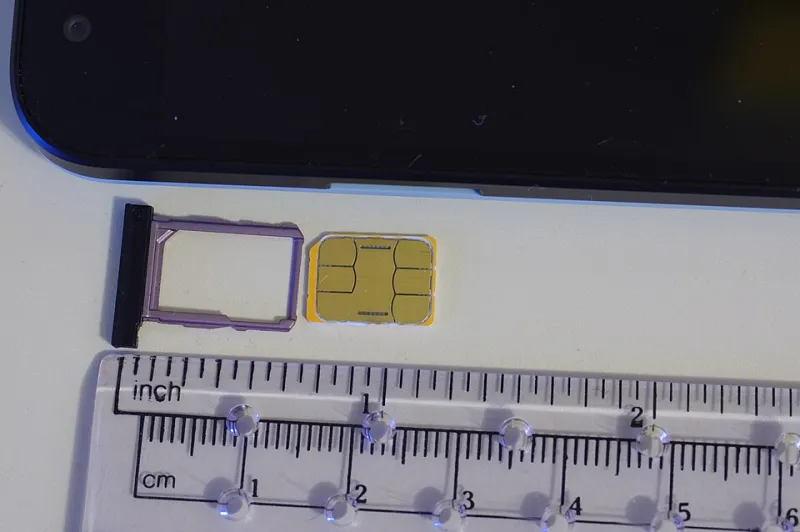
Photo: Charles Spirtos, Public domain, via Wikimedia Commons
Porting your main number to a new UK network is a bit like moving house. You can read all the reviews, stare at the coverage map, and convince yourself it will be fine. But you do not really know until you have spent a few weeks living there. The good news is that your dual-SIM phone has a spare slot, and that slot is a low-stakes audition room.
Why the spare slot is the cheapest test lab
Most dual-SIM handsets take a nano-SIM and an eSIM, or two nano-SIMs. That gives you a simple option: keep your main number exactly where it is and drop a cheap trial SIM into the other slot. Buy a PAYG SIM or a one-month eSIM plan from the network or MVNO you are curious about. The trial line gets its own number. Use it for data and outbound calls. You are testing the network, not gambling with your main number.
This is especially useful with MVNOs. An MVNO runs on a host network, but that does not mean the experience is identical. Data prioritisation, Wi-Fi calling support, visual voicemail, and customer service can all differ. A month in your actual phone, in your actual life, tells you more than a headline speed claim.
Set up a fair audition
Start by labelling the lines in settings. Call one Main and the other Trial. Set the trial SIM as your default data line for the test period. When you make calls, choose the trial line deliberately. Note which host network the MVNO uses, because that is the network whose signal you are really testing.
Fairness matters. Do not compare one speed test at 3am on a Sunday with one at 6pm on a Thursday. Do not compare one bar on the trial line with five bars on the main line and declare a winner. Use the same phone, the same locations, and roughly the same times. Keep a simple scorecard in notes or a spreadsheet.
What to test in real life
Home and work are the big two. If the trial network cannot hold a call in your kitchen or load a webpage at your desk, the rest does not matter. Then test the commute: the train, the bus, the walk to the station. Test indoors, because signal is not evenly distributed around a building. Try a basement, a lift lobby, and a busy cafe.
For calls, look at setup time, clarity, and dropped calls. Does the trial line support VoLTE? Does Wi-Fi calling work, and does it kick in when the mobile signal is weak? For data, run speed tests at peak and off-peak. Check upload speed as well as download, because video calls and cloud backups care about both. Try tethering a laptop and watching a video.
Do not forget the boring bits. Can you send and receive SMS? Does MMS work if you use it? Is visual voicemail supported? How long does customer service take to answer? Does the phone feel warmer or drain faster on the trial line? These are the details that decide whether a network is pleasant or merely adequate.
Compare without fooling yourself
Signal bars are a rough guide, not a score. Use the same speed test server each time, run three tests per location, and note the time of day. If you want to get geeky, jot down the signal strength in dBm from your phone's network settings or a monitoring app. A difference of a few dBm is not life-changing, but a consistent weak signal indoors is a warning sign.
Score each network on the things you actually do. If you mostly make calls, call reliability matters more than a 5G speed record. If you work from trains, latency and dropouts matter more than peak download. If you travel, check roaming terms and whether the plan includes EU roaming.
When to walk away
Walk away if the trial network cannot hold a call at home, drops data at peak times, or lacks Wi-Fi calling on a phone that supports it. Walk away if the contract is long and the exit fees are ugly, or if customer service has already failed you during the trial. A month is long enough to see the pattern.
If the trial is fine in one place but shaky elsewhere, extend it. Buy another month. That is still cheaper than porting your main number and discovering the problem after the fact.
The porting bit: PACs, timing, and pitfalls
Once you decide to switch, request a PAC from your current provider, not from the trial provider. The PAC is valid for 30 days. Do not cancel your current line before the port completes. Keep the old SIM in the phone until the switch is done, and check the final bill afterwards.
Porting usually takes one working day, but avoid doing it just before travel or a week when you need bank OTPs. The trial SIM's number is disposable. When you port your main number onto the new network, it normally replaces the trial number. If you want to keep the trial number as a backup line, ask the new provider before you start.
Watch out for termination fees, direct debit timing, and eSIM transfer quirks. If you are moving from a contract, confirm the early termination charge in writing. If you are moving to an eSIM, make sure you have the activation QR code or app login before you cancel anything.
A simple 30-day plan
Week one: set up the trial SIM, test home and work, and check calls and texts. Week two: focus on the commute and indoor coverage. Week three: hammer peak-time data, tethering, and video calls. Week four: decide, request the PAC if you are switching, and port with your eyes open. Keep notes as you go, because memory is a terrible network tester.
The spare slot is not just for travellers and work numbers. It is a try-before-you-buy lane for UK networks. Use it, and you will port with evidence instead of hope.